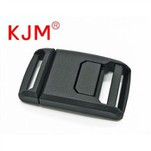
Selecting infant gear like strollers and carriers demands meticulous attention to safety, particularly the buckles (or "plug buckles"). These critical components are the frontline defense for your child. Here's how to choose wisely:
Safety & Environmental Compliance:
Rigorous Standards: Insist on buckles certified to relevant safety standards (e.g., EN 1888 for strollers, ASTM F2236 for carriers, EN 71, CPSIA). This ensures they withstand required force tests (tensile strength, dynamic impact) and won't fail unexpectedly.


Child-Resistant, Adult-Manageable: Buckles must require sufficient force (typically 40-50N minimum) to open, preventing accidental release by a child, yet remain operable by an adult with one hand. Look for the clear, audible "click" confirming secure engagement.

Eco-Friendly & Non-Toxic: Materials must be phthalate-free, lead-free, BPA-free, and meet strict chemical migration limits. Choose buckles made from food-grade or medical-grade plastics (like PP, POM). Reputable manufacturers provide material compliance certificates. KJM buckle material have pass the California Proposition 65,REACH, OEKO-TEX, and CPSIA.


2. Matching the Buckle Type to the Product:
5-Point Harness Buckle: Essential for strollers, high chairs, and bouncers/rockers. Offers the highest security by restraining at shoulders, hips, and between legs, distributing crash forces optimally. Look for robust, centrally-located releases. KJM company offers a variety of compliant 5-point safety harness buckles to ensure the safety of children when using the product.


4-Point Buckle: Primarily used for children's swim rings/floatation aids, providing secure torso restraint without the crotch strap. Less common in strollers/carriers.


3-Point Buckle: Suitable for swings and some specific high chairs where upper body restraint is key, but lower body movement is less critical or restrained differently. Offers less hip security than 5-point.


2-Point Buckle (Waist Buckle): Highly versatile. Used for securing waist belts on carriers, backpack carriers, some stroller harnesses (combined with shoulder straps), and various other infant products (e.g., safety vests, reins). Ensure it's robust enough for its specific application.


Key Selection Tips:
Inspect Before Use: Check for cracks, sharp edges, stiffness, or signs of wear. Discard damaged buckles immediately.
Test the Action: Buckles should engage smoothly with a distinct click and release cleanly with the designed mechanism (button push, lever squeeze).
Prioritize Reputable Brands: Choose products from manufacturers known for rigorous safety testing and quality control.
Consider Environment: Opt for buckles made from durable, UV-stable materials suitable for the product's intended climate and usage.
KJM buckles will not disappoint you in meeting the above requirements. By prioritizing certified safety, non-toxic materials, and choosing the buckle type specifically designed for the product's purpose, you ensure your child's harness provides the critical protection they need. Never compromise on buckle quality.